In-Person Meeting
Virtual Zoom Option
7:30 PM EST
An overview of insect sensory systems and why we study them
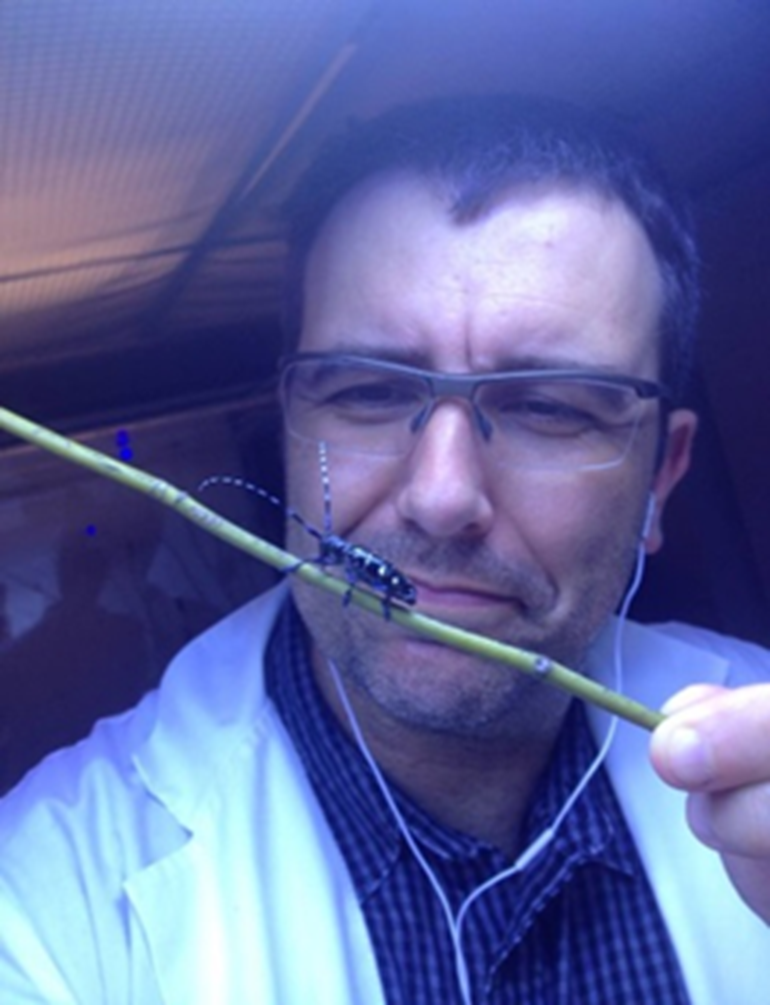
Damon Crook
Insect Chemical Ecologist
APHIS USDA MA
The Forest Pest Methods Laboratory in Cape Cod, MA, provides research and tools for detection, survey and control of exotic pests that safeguard the agricultural commodities, natural resources, and trade of the USA. Our lab provides method development for commodity treatments, Biocontrol, Molecular ID, Trapping, Lure Development and General Ecology/Behavior. An important part of our labs research is to identify attractants for new invasive pests so that monitoring surveys can be quickly established. This presentation will give a brief overview of insect sensory systems and the electrophysiological methods we use to study them. Research examples from our lab will include important invasive pests such as the emerald ash borer Agrilus planipennis, Asian Longhorn Beetle, Anoplophora glabripennis and the coconut rhinoceros beetle, Oryctes rhinoceros.